So recently, I went for a two week summer camp at Plaksha University. And now, I’m gonna talk about my experience of going there. This might be a long blog post, so get some soda, popcorn, sit tight, and I would really appreciate it if you read through it.
So on day 1, we reached Plaksha around 12:00 in the afternoon. I knew there would be a lot of people there, but the crowd at the reception still surprised me. After asking some of the buddies for help, I found the room I had to go to, registered myself, and got my welcome kit.
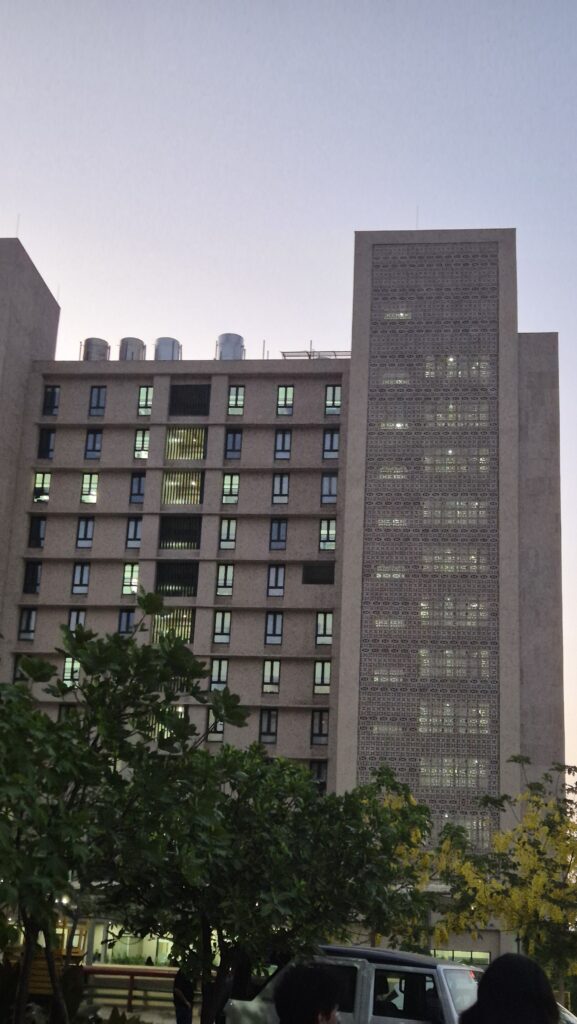
After that, we found the dining hall, which was where they were serving lunch. For the fact that it was a college mess, they had a surprisingly wide range of choices, even including chicken. The food tasted good, and me and my brother ate with our parents before saying goodbye to them. We weren’t gonna see them for the next two weeks.
After lunch, they started the program with an introduction session about everything that was gonna happen over the next two weeks. On the way to the auditorium, I met two guys who ended up being my friends till the very end of the program.
That session went on for around two hours, explaining the basics of the program, the rules, the curfew timings, and all of that. Other than that, the first day was pretty relaxed. We were free to explore the university and see what was around. I barely came back to the room. Most of the time, I was outside just walking around and checking out the campus.
The next day was when the learning actually started.
They had skill modules, which were classes outside your main track. I took basic programming and EM, which was an introductory electronics module.
Every morning started with a keynote session, followed by research talks and our classes. Some of the keynote sessions were on topics I wasn’t very interested in. There were quite a few talks on biology, which I’m sure I’m going to find extremely useful as a robotics student. But others were really interesting. The research talks were generally enjoyable, especially the aerospace one. In programming, we learned the basics of Python, and in EM we learned the basics of electronics.
The food was decent as well it didn’t taste great, it didn’t taste terrible, except for the fact that every day they somehow found a new name for dal. At this point, I’m convinced there is one giant pot of dal somewhere and every day they just give it a different name.
This was pretty much the routine for the first few days, which was known as the exploratory phase.
In the evenings, we had free time. You could nap, roam around campus, play sports, or do pretty much whatever you wanted. After dinner, we also had free time before curfew at 10:30.
One evening, I decided to take my guitar to the ground outside. When I got there, nobody else was around, and I definitely wasn’t expecting anything to happen. But slowly, more and more people started showing up. Before I knew it, there were around 25 people sitting there singing while I played the guitar. I went there expecting some peace and quiet, and somehow ended up with an audience. I didn’t sing, but it was still one of the most memorable evenings of the entire camp.
A few days later, they organized an icebreaker session. Instead of making us awkwardly introduce ourselves, they gave us marshmallows and sticks and told us to build the tallest tower possible.
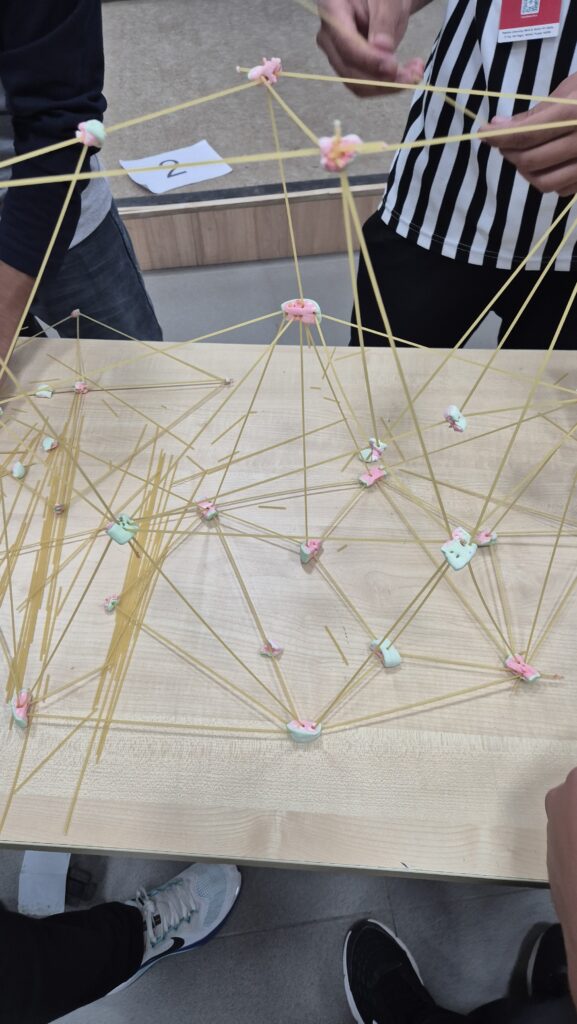
We were split into random teams and got to work. Sadly, my team didn’t win, but my brother’s team managed to win in the last few seconds.
After about five days, everything became routine. We got used to the schedule, learned our way around campus, and developed a mental map of where everything was.
But then came the project phase, which was where things got really interesting.
At the beginning, they introduced us to the makerspace and told us we would be spending lots of time there. But by the end of the project, the makerspace just seemed like a legend that everyone knew about, but nobody ever went to.
We also learned the basics of aerodynamics, like how planes fly and the different forces acting on them. During this time, we were also being introduced to the different projects we could choose from. The one that immediately caught my attention was the glider project.
The problem was that everybody wanted it.
Registration was first come, first served, and the form was opening at 11. I was ready when the form opened, submitted it immediately, and somehow managed to get in.
I got the glider project.
Once the teams were finalized, we started building our first gliders.
These weren’t the final versions. They were made from Depron sheets and were mainly meant to help us understand how gliders worked. We spent a day building them and testing them. Sometimes they flew beautifully. Other times they immediately found the nearest obstacle and crashed into it. It was almost as if the glider was actively searching for things to hit.
Whenever that happened, we had to repair and adjust them before testing again. Honestly, I learned much more from those crashes than I would have from another lecture.
Around this time, there was also a sports day.
There were competitions for basketball, football, badminton, chess, and more. I didn’t participate because I don’t really know most sports, but a lot of my friends were playing football, so I spent most of the day watching their matches and supporting them from the sidelines.
One friend’s team got knocked out in the very first match itself, which was unfortunate because their sports day ended almost as soon as it started. Another friend’s team, on the other hand, had a much better run and managed to make it all the way to the finals.
So for most of the day, I was either watching football matches or waiting for the next one to start. The matches themselves were pretty competitive, although there were a few referee decisions that got people talking. The referee’s decision making process remains a mystery to this day.
Sadly, my friend’s team lost in the finals, but it was still fun watching and supporting them throughout the day.
Then came another major event that many of us had been preparing for: the talent show.
We had registered for it, but there was one small problem: we had barely practiced. Looking back, registering first and practicing later probably wasn’t the smartest strategy.
The performance was a group performance between me, my brother, and a few of my friends, and we had chosen to perform “Night Changes.”
So on Monday, practice officially began. Late nights, endless repetitions, and me nearly falling asleep while holding a guitar became the routine.
Then Thursday arrived.
I wasn’t nervous because of the stage. I was nervous because I wasn’t completely confident in the song.
When we went backstage, it finally hit me that I was about to perform in front of around 300 people. Which was great timing, because I still had a few minutes left to panic.
Then our turn came.
We got on stage and started playing.
It went decent. Not amazing, not terrible. We got through the song without any major disasters, which was honestly what I was hoping for.
Looking back, considering how little we had practiced, it went much better than I expected.
After that, it was time to build the final version of our glider.
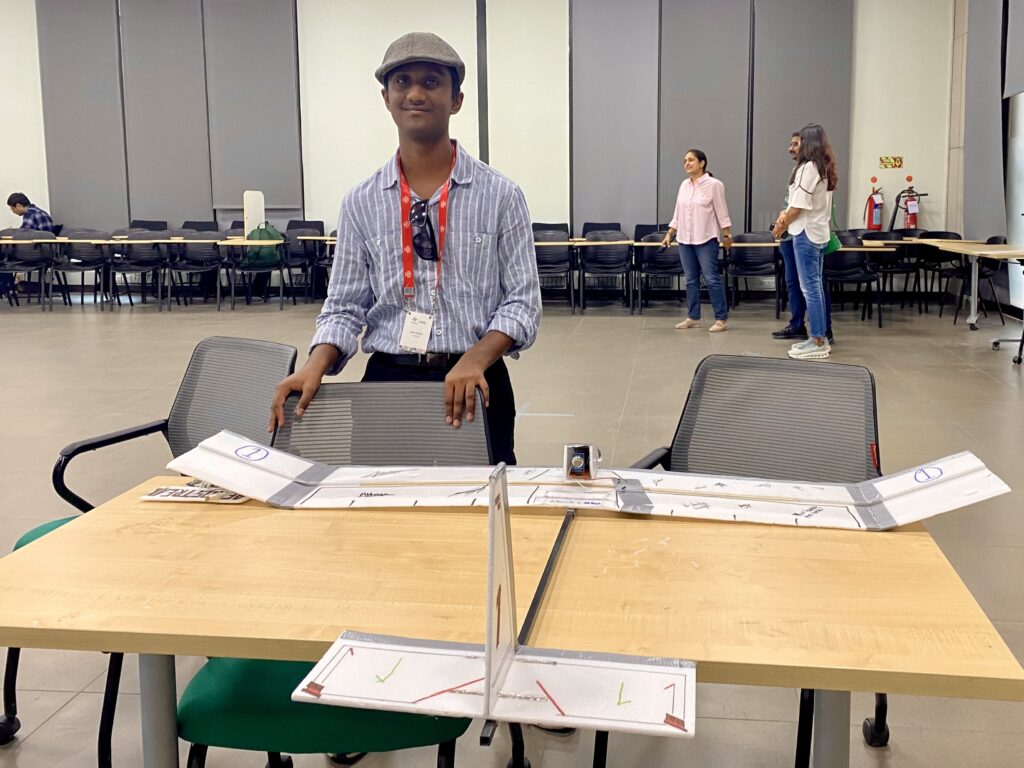
This one used carbon rods for the structure, while the wings were still made from Depron sheets. We also had to attach a sensor and an ESP32 microcontroller so that the glider could collect weather data.
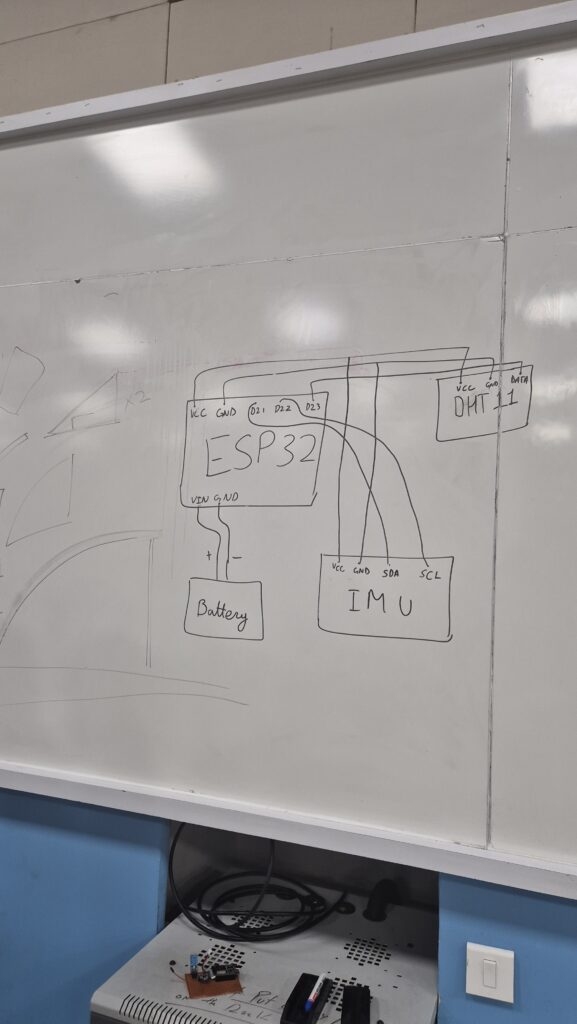
Half the teams got temperature and humidity sensors, while the other half got dust and particle sensors. My team got the dust sensor.
It took us about a day and a half to build both the glider and the payload. After that, most of our time was spent testing and making adjustments because every day something would behave slightly differently.
And before we knew it, we were already approaching the end of the program.
One day, the Lieutenant Governor of Delhi visited the university and gave a talk. He spoke about his experiences, following your passion, and making the most of opportunities like this. One thing he mentioned was that students today have access to opportunities that simply weren’t available when he was younger.
The best part was when he started taking questions from students. It made the session feel much more interactive rather than just another speech.
And then, somehow, two weeks had passed.
I genuinely don’t know how it happened so quickly.
It felt like we had just arrived, and suddenly it was time for Demo Day.
On the final day, we presented our glider project to our parents. We spent our time flying the glider, explaining the project, collecting data, and occasionally repairing damage. Clearly, the glider had different career goals than we did.
After that came the closing ceremony.
Some students shared their experiences, faculty members gave speeches, and everyone reflected on what had happened over the previous two weeks. They wished us good luck for the future and encouraged us to continue building projects and not forget what we had learned.
And then just like that, the program was over.
Honestly, I still don’t know how those two weeks passed by so quickly. It felt like we had just arrived, and suddenly it was time to go home.
Looking back, I learned a lot there. I learned some programming, some electronics, a bit of aerodynamics, and a lot through the research talks. But I think the biggest thing I got from the program wasn’t actually any of those things.
It was just the whole experience of being there.
Staying away from home for two weeks, meeting new people, working on projects, playing guitar in front of random groups of people, performing in the talent show, and building a glider with my team are things I probably wouldn’t have experienced otherwise.
On the first day, I didn’t even know where the dining hall was, and by the last day, I could get around campus without thinking twice about it.
The glider project was definitely my favorite part of the program, but what I’ll probably remember the most are all the people I met and all the random things that happened during those two weeks.
If I got the chance to do it again, I definitely would.
That’s it for this post! See you all next time.
